

 Español
 Slovenščina
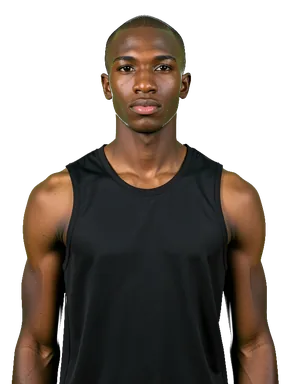

Benoît
Illo
Point guard
Academy: Vitraux Chartres

Academy: Vitraux Chartres
18 years · 189 cm · 87 kg · France · Squad number 78
 France
At a glance




What is Stars?
Stars
The grade your scouts give him out of five, for his ability now and for his potential. Half a star is ten rating points. Solid stars are what your scouts know. Light blue stars show how far off they might be.
Nothing on its own. The stars are read from the same number or band printed beside them, so they never say more than it does.
Scout him. A narrower range turns light blue stars solid; your own players read exact.
Run a basketball club of your own
You pick the squad, work the market and set up the night's games. It is free to start, and you can be playing in minutes.
Where he is at home
What is Familiarity?
Familiarity
How at home a player is at a position, from 1 to 99. His own position is always 99. Anywhere else it is what he has earned. It starts where the distance from his own position puts it, rises with the minutes he plays there and with a training focus on it, and slips when he neither plays nor trains there.
The cost of standing there. Every attribute he has is cut by up to 18 percent at the lowest familiarity and by nothing at 99, so a man who is at home at two positions is two players. It also decides who your assistant can use at the spot, who counts as cover for it in the fit report, and which second position he is listed at.
Play him there, or choose the position as his training focus in the second slot of his plan. Both together are fastest. Keep playing him there afterwards: a position left idle fades by about a level a season.
Last five
MIN · PTS · REB · ASTNo matches played yet
His lines appear here from the first match he takes the floor in.
Honours
Nothing yet. A title counts for him when he played at least half of his club's games that season; an award is given on the season's last days.
Eligibility
Counts as foreign in French Second Division (not trained locally) Why
- Passport
- France
- Trained in France, ages 12 to 21
- 4 seasons needed
- His stamp
- None
- Result
- Restricted (foreign quota)
What a club may do about it is on its Rules tab.
At a glance
Today
What is Form?
Form
Whether he has been playing well lately, measured against what a player of his rating should be producing. Runs from −1 to +1, and starts at 0.
How he shoots and performs in the next match, alongside the team's form as a whole.
Only playing well clears it. It is the one measure that remembers last week: rating is what he can do, morale is how he feels, consistency is how widely he swings, and none of those looks back.
What he can do
a range: what the game showsPlaymaking 25–44
Passing 41–60
Passing
Delivery, accuracy and timing.
How many assists he creates, and how often a pass of his is turned over.
Ball handling 41–60
Ball handling
Dribbling under pressure.
How often he loses the ball, and whether he can start a drive at all.
Basketball IQ 21–40
Basketball IQ
Reading the game: positioning, rotations, knowing what is about to happen.
Where he is standing on defence, whether the help arrives, and whether he sees the pass that is there.
Decision making 21–40
Decision making
Shot selection, and knowing when to pass.
The quality of the shots he chooses, and how often he turns the ball over.
Screening 1–20
Screening
Setting screens, and using them.
His teammates' shot quality and the screen assists he generates: not his own scoring. A great screener raises the whole lineup and appears in nobody's box score.
Scoring 21–40
Three-point 21–40
Three-point shooting
How well he shoots from beyond the arc.
How often his three-point attempts go in, and, through the lineup around him, how much room everyone else has to work in.
Mid-range 21–40
Mid-range shooting
Pull-ups and jumpers inside the arc.
How often his mid-range attempts go in.
Finishing 21–40
Finishing
Scoring at the rim, through contact.
How often he scores at the rim, how often he draws the foul with the basket, and how well he converts in transition.
Free throws 21–40
Free-throw shooting
How reliably he makes free throws.
How often his free throws go in, and nothing else, deliberately, so that a poor free-throw shooter can be punished by fouling him.
Off the ball 21–40
Movement off the ball
Cutting, relocating and getting open when he does not have the ball.
The quality of the shots he receives, and the chances he creates for himself without the ball in his hands.
Inside 16–35
Post play 1–20
Post play
Back-to-basket scoring, and passing out of the post.
How often the offence goes through him with his back to the basket, and how well it works when it does.
Offensive boards 21–40
Offensive rebounding
How hard and how well he goes after a shot his own team has missed, instead of retreating.
The share of your own missed shots he wins back.
Defensive boards 21–40
Defensive rebounding
How reliably he ends a possession by claiming the ball after a miss at his own basket.
The share of the opponent's missed shots he ends the possession on.
Shot blocking 21–40
Shot blocking
How often he gets a hand to what is put up near the rim, and how hard he makes it to shoot over him.
How many shots he blocks, and how many the opponent declines to take at the rim because he is standing there.
Defence 26–45
Perimeter 41–60
Perimeter defence
How well he stays in front of the man he is marking out on the wing and at the arc.
How good a look the man he is guarding gets from outside.
Interior 1–20
Interior defence
Guarding the paint and defending the post.
How good a look the opponent gets at the rim.
Steals 41–60
Stealing
Forcing live-ball turnovers.
How often he takes the ball off the opponent.
Aggression 21–40
Aggression
Defensive intensity and physicality.
How many fouls he commits, how often he goes for the steal, and how much pressure the opponent feels.
Athletic 27–46
Speed 41–60
Speed
Top-end speed in the open court.
How often your team gets out in transition, and how often it scores when it does.
Acceleration 41–60
Acceleration
First step and change of pace.
Whether his drives get past the man, and whether he recovers to close out.
Agility 41–60
Agility
Lateral quickness and change of direction.
Perimeter defence above all, and keeping a driver in front of him.
Leaping 21–40
Leaping
How high he gets off the floor.
Rebounding at both ends, blocked shots, and finishing at the rim.
Strength 1–20
Strength
Physical power and holding position.
Post play, finishing through contact, and rebounding.
Stamina 21–40
Stamina
How well he resists tiring during a game.
How many minutes he can play before his performance starts to drop, and how far it drops late in games.
Durability 21–40
Durability
How well he stands up to the wear of a season.
How quickly he recovers between matches, and how often he picks up a minor knock.
Mental 29–48
Composure 21–40
Composure
How he performs under pressure.
Shooting and free throws in the last three minutes of a close game, and turnovers late.
Consistency 21–40
Consistency
How reliable he is from one night to the next.
How widely his performance swings around his own average. It changes the spread, not the level, so two players with the same season figures can be very different to manage.
Work ethic 41–60
Work ethic
How hard he applies himself in training.
How much he gains from training, and whether he can push a little past his potential. Nothing in a match reads it at all.
Leadership 21–40
Leadership
How much he lifts the players around him.
Your squad's morale, and how steady the team is late in games. It works on his teammates and never on himself.
Determination 41–60
Determination
How hard he keeps working when things are going badly.
How the team behaves when it is trailing, and how much of a comeback it is capable of.
What he can be
What is Role fit?
Role fit
How well a man's attributes suit one of the nine jobs a coach can give him. It is a number on the same scale as his attributes.
Nothing on its own. A job he suits gives the team more of what the job is for; a job he does not suit still runs and gives less.
Train the attributes the job is made of. For another club's man, scout him: the band narrows as your scouts watch.
His nine possible jobs, read from what anybody can see of him.
What is Defensive specialist?
Defensive specialist
The on-ball stopper: he takes the other side's best scorer.
He contests every shot his man takes and walls off his drive. He fouls more, tires faster and takes almost no shots himself. Against a zone there is no man to guard, so the role does nothing.
Perimeter defence, agility, steals, basketball IQ and strength are what the role is judged on.
How 35.0 to 54.0 is made
The low column is each attribute at the bottom of your scouts' band, the high column at the top. Shown as 35 to 54. The word is for the middle of the band.
What is Facilitator?
Facilitator
The man who runs the offence from the ball and sets the others up.
He starts more plays and looks for the shooter first, so he is credited with more assists, and he drives and pulls up less himself.
Passing, ball handling, basketball IQ and decision making are what the role is judged on.
How 34.0 to 53.0 is made
The low column is each attribute at the bottom of your scouts' band, the high column at the top. Shown as 34 to 53. The word is for the middle of the band.
What is Energy player?
Energy player
A man who comes off the bench to chase loose balls.
While he is on the floor the team steals more, rebounds more on offence and runs more fast breaks. He also tires faster, so his stints are shorter. If he starts the match, the role does nothing.
Stamina, aggression, offensive rebounding, steals and determination are what the role is judged on.
How 27.0 to 46.0 is made
The low column is each attribute at the bottom of your scouts' band, the high column at the top. Shown as 27 to 46. The word is for the middle of the band.
What is Primary option?
Primary option
The first option in your offence: the man the plays are run for, and the one who takes the last shot.
He takes the most shots on the floor. It is the same setting as Primary option on the tactics page, and the other men have the ball a little less.
Give the job to the man whose shot creation is the best in your five; the instructions screen shows how he measures against the others.
How 25.0 to 44.0 is made
The low column is each attribute at the bottom of your scouts' band, the high column at the top. Shown as 25 to 44. The word is for the middle of the band.
What is Spot-up shooter?
Spot-up shooter
A shooter who waits on the arc for the pass.
More of the catch-and-shoot chances go to him, and more of his shots are threes. He also spreads the floor, which opens the drive for his teammates. He creates little for himself.
Three-point shooting, off-ball movement and midrange shooting are what the role is judged on.
How 21.0 to 40.0 is made
The low column is each attribute at the bottom of your scouts' band, the high column at the top. Shown as 21 to 40. The word is for the middle of the band.
What is Secondary scorer?
Secondary scorer
The second option in your offence: a man who is asked to score when the first is covered.
He takes a second man's share of the shots, off the dribble more than off a pass, and the others take fewer. It needs a primary option to be second to.
Pick the man with the best scoring in your five after your primary option; the fit sentence on his instructions says whether he is.
How 19.8 to 38.8 is made
The low column is each attribute at the bottom of your scouts' band, the high column at the top. Shown as 20 to 39. The word is for the middle of the band.
Only a man who can play power forward or centre can be roll man.
Only a man who can play power forward or centre can be stretch big.
Only a man who can play power forward or centre can be rim protector.
His deal
What he is paid is between him and his club. To sign him, make his club an offer, or put a trade together.
Contract
What is Wage?
Wage
What the club pays him, as the deal stands today. It is quoted by the season where the world quotes that way, and by the week where it does not, and it is paid in equal daily shares across every day of the season, offseason included. A contract with an annual rise moves this figure once a season, at rollover, so the number shown is always what is actually being paid, not what was signed.
The club's wage bill every week, and through the salary rules how much room is left to sign anybody else.
It is fixed until the deal changes. A rise written into the contract, or a new contract altogether.
What is Contract ends?
Contract ends
The season after which his deal runs out. Contracts end at the season's close: when that rollover comes he leaves the squad and enters the free-agent pool, owing the club nothing.
When he can walk away for free, and how urgent the question of his future is. A short deal is a cheap player about to become an expensive decision.
When a deal is near its end you can offer him new terms. An agreement takes effect the season after the current one runs out. If you leave it, he reaches the free-agent pool, where anybody can sign him.
Development
Nothing has moved yet.
Training changes attributes a little at a time, and every change is listed here when it happens.