


Skip to content
Sign in Create account
Features Watch the league

Watching Europe and South America 69 leagues

Back to the squad

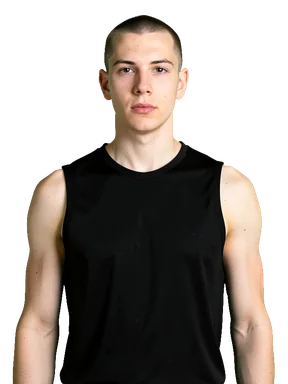
Lazar
Sredojević

Small forward
Academy: Pastiri Ivanjica

Academy: Pastiri Ivanjica

Pastiri Ivanjica

17 years · 205 cm · 106 kg · Serbia · Squad number 13

At a glance

Overall 21–40
Potential 61–80 Room to grow: 21–59 points.
Ability and potential ⁠
What is Stars?

Stars

The grade your scouts give him out of five, for his ability now and for his potential. Half a star is ten rating points. Solid stars are what your scouts know. Light blue stars show how far off they might be.

Nothing on its own. The stars are read from the same number or band printed beside them, so they never say more than it does.

Scout him. A narrower range turns light blue stars solid; your own players read exact.

See all terms

Fans Unknown
Merchandise 15 of 15 at the club
Habits None yet

Run a basketball club of your own

You pick the squad, work the market and set up the night's games. It is free to start, and you can be playing in minutes.

Where he is at home

⁠
What is Familiarity?

Familiarity

How at home a player is at a position, from 1 to 99. His own position is always 99. Anywhere else it is what he has earned. It starts where the distance from his own position puts it, rises with the minutes he plays there and with a training focus on it, and slips when he neither plays nor trains there.

The cost of standing there. Every attribute he has is cut by up to 18 percent at the lowest familiarity and by nothing at 99, so a man who is at home at two positions is two players. It also decides who your assistant can use at the spot, who counts as cover for it in the fit report, and which second position he is listed at.

Play him there, or choose the position as his training focus in the second slot of his plan. Both together are fastest. Keep playing him there afterwards: a position left idle fades by about a level a season.

See all terms

Unfamiliar PG Point guard Unfamiliar
Learning SG Shooting guard Learning
Natural SF Small forward Natural
Learning PF Power forward Learning
Unfamiliar C Centre Unfamiliar
Natural Accomplished Learning Unfamiliar

Where he stands

Scoring 0.7 a game 143 of 174
Rebounding 2.3 a game 86 of 174
0 assists a game 132 of 174
Game score -0.2 a game 164 of 174
What is game score?

One number for how much a player did in a game: points, rebounds, assists, steals and blocks added up, with missed shots, turnovers and fouls taken off. It is a published basketball measure, not one this game invented. It changes nothing on the floor. Every figure in it is on the match report for anyone to read, which is why it can be shown for any player at any club.

Among the 174 players with at least 3 games this season.

Last five

MIN · PTS · REB · AST
at Topioničari Bor 9.2 0 2 0 -7
vs Freskari Prijepolje 11.0 2 5 0 -1
vs Kiridžije Mionica 5.8 0 0 0 -2

⁠
Where he shoots

Where he shoots

The season of one man in the three zones: the share of his shots from each, and how well he scores there against the league.

It is a record of what he has done, counted from his box scores. The sentence names the zone he leans on, when his share there is a quarter above the league average.

Give him the role that suits it: a rim finisher is best with passers, a shooter with space. His shooting attributes are the cause, this is the effect.

See all terms

season 2
1 / 3 33% · rim 0 / 1 0% · mid 0 / 1 0% · three

A rim finisher who rarely takes threes.

  • above the league's zone average
  • below it
RIM 1 / 3 · 33% 60% of his shots · league 60% · league 36% 2pts
MID 0 / 1 · 0% 20% of his shots · league 39% · league 23% 0pts
THREE 0 / 1 · 0% 20% of his shots · league 36% · league 42% 0pts

Attempts 3 + 1 + 1 5

Makes 1 + 0 + 0, 20% from the floor 1

⁠
Every shot this season

Every shot this season

One dot for each field-goal attempt he took in a league game this season: filled when it went in, hollow when it missed. The distance from the ring is the recorded one. The side of the floor is only drawn for the picture, as in the replay.

It is a record, not a rule. The zones and their makes are counts of the dots, and the line under them sets those counts beside his box score. The two match when the dots cover every game.

Read where his makes cluster, then give him the role and the minutes that put his shots there. Filter by quarter to see whether he fades or finishes.

See all terms

season 2

5 of 5 shots shown

10 ft 20 ft Q3 7:42 · Lazar Sredojević · a 26-foot three · missed. Q2 4:43 · Lazar Sredojević · a 10-foot jumper · missed. Q3 9:40 · Lazar Sredojević · a 1-foot finish at the rim · missed. Q4 8:43 · Lazar Sredojević · a 3-foot finish at the rim, blocked by Milovan Kljajić · missed. Q4 5:32 · Lazar Sredojević · a 0-foot finish at the rim, unassisted · made.
  • Made
  • Missed
  • bar = blocked
  • Distance is the match record. The side of the floor is drawn for the picture.

Shots by zone

Counts of the dots
RIM 1 / 3 33% · avg 1.3 ft 2pts
MID 0 / 1 0% · avg 10.0 ft 0pts
THREE 0 / 1 0% · avg 26.0 ft 0pts

The dots are his box score: 1 of 5 from the floor in 3 games.

⁠
How good his shots are

Expected points

The points the league gets from shots like this one this season: the zone, the play, whether it came on the break and whether it came on a second chance. It does not know who was guarding or how far out he stood, because the game records neither. A club's expected points are the sum over its shots, and every figure opens to the kinds of shot it is made of.

It is a measure, not a rule: nothing in a match depends on it. It tells shot selection (how good the shots were) apart from shot-making (what the men did with them), so a bad night reads as bad luck or bad shots rather than just a bad night.

Take more of the shots the league scores most from, the rim and the open three, and fewer long pull-ups; the tactics page moves shots between them.

See all terms

Too few shots

Too early to call

Shots are worth 1.11
League 1.06
Made for 0.40
How we counted it
Expected points: his 5 shots, kind by kind5.6
÷ 5 shots1.11
Points from the floor: 2 × 1 + 02
÷ 5 shots0.40

Expected points are measured against league rates through round 3.

His shots, kind by kind
Kind of shotShotsWorthPoints
Mid-range · Drive · second chanceonly a few league shots like it, so the zone's rate: 39 % of 59710.780.8
Rim · Drive62 % of 399 league shots31.233.7
Three · Catch and shoot36 % of 617 league shots11.081.1
Total adds up51.115.6
Too few shots

Too early to call

–

Only 5 of his shots are counted so far. We say lucky or unlucky from 6 shots up.

UnluckyAs expectedLucky
More statsThe kinds of shot he takes
DrivePost-upCatch and shootPull-up
He
80% 20%
League
33% 42% 18%

Honours

Nothing yet. A title counts for him when he played at least half of his club's games that season; an award is given on the season's last days.

At a glance

Today

Form ⁠
What is Form?

Form

Whether he has been playing well lately, measured against what a player of his rating should be producing. Runs from −1 to +1, and starts at 0.

How he shoots and performs in the next match, alongside the team's form as a whole.

Only playing well clears it. It is the one measure that remembers last week: rating is what he can do, morale is how he feels, consistency is how widely he swings, and none of those looks back.

See all terms

-0.3

What he can do

a range: what the game shows

Playmaking 21–40

Passing 21–40

Passing

Delivery, accuracy and timing.

How many assists he creates, and how often a pass of his is turned over.

Ball handling 21–40

Ball handling

Dribbling under pressure.

How often he loses the ball, and whether he can start a drive at all.

Basketball IQ 21–40

Basketball IQ

Reading the game: positioning, rotations, knowing what is about to happen.

Where he is standing on defence, whether the help arrives, and whether he sees the pass that is there.

Decision making 21–40

Decision making

Shot selection, and knowing when to pass.

The quality of the shots he chooses, and how often he turns the ball over.

Screening 21–40

Screening

Setting screens, and using them.

His teammates' shot quality and the screen assists he generates: not his own scoring. A great screener raises the whole lineup and appears in nobody's box score.

Scoring 37–56

Three-point 21–40

Three-point shooting

How well he shoots from beyond the arc.

How often his three-point attempts go in, and, through the lineup around him, how much room everyone else has to work in.

Mid-range 41–60

Mid-range shooting

Pull-ups and jumpers inside the arc.

How often his mid-range attempts go in.

Finishing 41–60

Finishing

Scoring at the rim, through contact.

How often he scores at the rim, how often he draws the foul with the basket, and how well he converts in transition.

Free throws 41–60

Free-throw shooting

How reliably he makes free throws.

How often his free throws go in, and nothing else, deliberately, so that a poor free-throw shooter can be punished by fouling him.

Off the ball 41–60

Movement off the ball

Cutting, relocating and getting open when he does not have the ball.

The quality of the shots he receives, and the chances he creates for himself without the ball in his hands.

Inside 26–45

Post play 21–40

Post play

Back-to-basket scoring, and passing out of the post.

How often the offence goes through him with his back to the basket, and how well it works when it does.

Offensive boards 41–60

Offensive rebounding

How hard and how well he goes after a shot his own team has missed, instead of retreating.

The share of your own missed shots he wins back.

Defensive boards 21–40

Defensive rebounding

How reliably he ends a possession by claiming the ball after a miss at his own basket.

The share of the opponent's missed shots he ends the possession on.

Shot blocking 21–40

Shot blocking

How often he gets a hand to what is put up near the rim, and how hard he makes it to shoot over him.

How many shots he blocks, and how many the opponent declines to take at the rim because he is standing there.

Defence 26–45

Perimeter 21–40

Perimeter defence

How well he stays in front of the man he is marking out on the wing and at the arc.

How good a look the man he is guarding gets from outside.

Interior 21–40

Interior defence

Guarding the paint and defending the post.

How good a look the opponent gets at the rim.

Steals 41–60

Stealing

Forcing live-ball turnovers.

How often he takes the ball off the opponent.

Aggression 21–40

Aggression

Defensive intensity and physicality.

How many fouls he commits, how often he goes for the steal, and how much pressure the opponent feels.

Athletic 24–43

Speed 21–40

Speed

Top-end speed in the open court.

How often your team gets out in transition, and how often it scores when it does.

Acceleration 21–40

Acceleration

First step and change of pace.

Whether his drives get past the man, and whether he recovers to close out.

Agility 21–40

Agility

Lateral quickness and change of direction.

Perimeter defence above all, and keeping a driver in front of him.

Leaping 21–40

Leaping

How high he gets off the floor.

Rebounding at both ends, blocked shots, and finishing at the rim.

Strength 21–40

Strength

Physical power and holding position.

Post play, finishing through contact, and rebounding.

Stamina 21–40

Stamina

How well he resists tiring during a game.

How many minutes he can play before his performance starts to drop, and how far it drops late in games.

Durability 41–60

Durability

How well he stands up to the wear of a season.

How quickly he recovers between matches, and how often he picks up a minor knock.

Mental 33–52

Composure 21–40

Composure

How he performs under pressure.

Shooting and free throws in the last three minutes of a close game, and turnovers late.

Consistency 21–40

Consistency

How reliable he is from one night to the next.

How widely his performance swings around his own average. It changes the spread, not the level, so two players with the same season figures can be very different to manage.

Work ethic 41–60

Work ethic

How hard he applies himself in training.

How much he gains from training, and whether he can push a little past his potential. Nothing in a match reads it at all.

Leadership 41–60

Leadership

How much he lifts the players around him.

Your squad's morale, and how steady the team is late in games. It works on his teammates and never on himself.

Determination 41–60

Determination

How hard he keeps working when things are going badly.

How the team behaves when it is trailing, and how much of a comeback it is capable of.

What he can be ⁠
What is Role fit?

Role fit

How well a man's attributes suit one of the nine jobs a coach can give him. It is a number on the same scale as his attributes.

Nothing on its own. A job he suits gives the team more of what the job is for; a job he does not suit still runs and gives less.

Train the attributes the job is made of. For another club's man, scout him: the band narrows as your scouts watch.

See all terms

His nine possible jobs, read from what anybody can see of him.

1 Energy player ⁠
What is Energy player?

Energy player

A man who comes off the bench to chase loose balls.

While he is on the floor the team steals more, rebounds more on offence and runs more fast breaks. He also tires faster, so his stints are shorter. If he starts the match, the role does nothing.

Stamina, aggression, offensive rebounding, steals and determination are what the role is judged on.

See all terms

31 to 50 Solid
How 31.0 to 50.0 is made
Attribute bandLowHigh
Stamina 21 to 40 × 0.25 5.3 10.0
Aggression 21 to 40 × 0.25 5.3 10.0
Offensive rebounding 41 to 60 × 0.20 8.2 12.0
Stealing 41 to 60 × 0.15 6.1 9.0
Determination 41 to 60 × 0.15 6.1 9.0
Adds up to31.050.0

The low column is each attribute at the bottom of your scouts' band, the high column at the top. Shown as 31 to 50. The word is for the middle of the band.

2 Secondary scorer ⁠
What is Secondary scorer?

Secondary scorer

The second option in your offence: a man who is asked to score when the first is covered.

He takes a second man's share of the shots, off the dribble more than off a pass, and the others take fewer. It needs a primary option to be second to.

Pick the man with the best scoring in your five after your primary option; the fit sentence on his instructions says whether he is.

See all terms

31 to 50 Modest
How 30.6 to 49.6 is made
Attribute bandLowHigh
Finishing 41 to 60 × 0.30 12.3 18.0
Three-point shooting 21 to 40 × 0.26 5.4 10.4
Mid-range shooting 41 to 60 × 0.18 7.4 10.8
Post play 21 to 40 × 0.16 3.4 6.4
Acceleration 21 to 40 × 0.10 2.1 4.0
Adds up to30.649.6

The low column is each attribute at the bottom of your scouts' band, the high column at the top. Shown as 31 to 50. The word is for the middle of the band.

3 Spot-up shooter ⁠
What is Spot-up shooter?

Spot-up shooter

A shooter who waits on the arc for the pass.

More of the catch-and-shoot chances go to him, and more of his shots are threes. He also spreads the floor, which opens the drive for his teammates. He creates little for himself.

Three-point shooting, off-ball movement and midrange shooting are what the role is judged on.

See all terms

30 to 49 Modest
How 30.0 to 49.0 is made
Attribute bandLowHigh
Three-point shooting 21 to 40 × 0.55 11.6 22.0
Movement off the ball 41 to 60 × 0.30 12.3 18.0
Mid-range shooting 41 to 60 × 0.15 6.1 9.0
Adds up to30.049.0

The low column is each attribute at the bottom of your scouts' band, the high column at the top. Shown as 30 to 49. The word is for the middle of the band.

4 Roll man ⁠
What is Roll man?

Roll man

A big who sets the screen and rolls to the basket.

More of his shots are at the rim, he crashes the offensive glass, and his teammates get better looks off his screens. He takes few jumpers.

Screening, finishing, vertical, strength and offensive rebounding are what the role is judged on. Needs a man who can play power forward or centre.

See all terms

29 to 48 Modest
How 29.0 to 48.0 is made
Attribute bandLowHigh
Screening 21 to 40 × 0.30 6.3 12.0
Finishing 41 to 60 × 0.25 10.2 15.0
Leaping 21 to 40 × 0.15 3.2 6.0
Strength 21 to 40 × 0.15 3.2 6.0
Offensive rebounding 41 to 60 × 0.15 6.1 9.0
Adds up to29.048.0

The low column is each attribute at the bottom of your scouts' band, the high column at the top. Shown as 29 to 48. The word is for the middle of the band.

5 Stretch big ⁠
What is Stretch big?

Stretch big

A big man whose job is to pull the defence out to the three-point line.

More catch-and-shoot threes for him and fewer post-ups, rim attempts and offensive rebounds. The defence has to come out to him, which opens the drive for the others.

Three-point shooting, off-ball movement, screening and midrange shooting are what the role is judged on. Needs a man who can play power forward or centre.

See all terms

28 to 47 Modest
How 28.0 to 47.0 is made
Attribute bandLowHigh
Three-point shooting 21 to 40 × 0.50 10.5 20.0
Movement off the ball 41 to 60 × 0.20 8.2 12.0
Screening 21 to 40 × 0.15 3.2 6.0
Mid-range shooting 41 to 60 × 0.15 6.1 9.0
Adds up to28.047.0

The low column is each attribute at the bottom of your scouts' band, the high column at the top. Shown as 28 to 47. The word is for the middle of the band.

6 Primary option ⁠
What is Primary option?

Primary option

The first option in your offence: the man the plays are run for, and the one who takes the last shot.

He takes the most shots on the floor. It is the same setting as Primary option on the tactics page, and the other men have the ball a little less.

Give the job to the man whose shot creation is the best in your five; the instructions screen shows how he measures against the others.

See all terms

27 to 46 Modest
How 26.6 to 45.6 is made
Attribute bandLowHigh
Finishing 41 to 60 × 0.18 7.4 10.8
Ball handling 21 to 40 × 0.18 3.8 7.2
Three-point shooting 21 to 40 × 0.14 2.9 5.6
Composure 21 to 40 × 0.14 2.9 5.6
Decision making 21 to 40 × 0.12 2.5 4.8
Mid-range shooting 41 to 60 × 0.10 4.1 6.0
Acceleration 21 to 40 × 0.08 1.7 3.2
Post play 21 to 40 × 0.06 1.3 2.4
Adds up to26.645.6

The low column is each attribute at the bottom of your scouts' band, the high column at the top. Shown as 27 to 46. The word is for the middle of the band.

7 Defensive specialist ⁠
What is Defensive specialist?

Defensive specialist

The on-ball stopper: he takes the other side's best scorer.

He contests every shot his man takes and walls off his drive. He fouls more, tires faster and takes almost no shots himself. Against a zone there is no man to guard, so the role does nothing.

Perimeter defence, agility, steals, basketball IQ and strength are what the role is judged on.

See all terms

24 to 43 Modest
How 24.0 to 43.0 is made
Attribute bandLowHigh
Perimeter defence 21 to 40 × 0.35 7.4 14.0
Agility 21 to 40 × 0.30 6.3 12.0
Stealing 41 to 60 × 0.15 6.1 9.0
Basketball IQ 21 to 40 × 0.10 2.1 4.0
Strength 21 to 40 × 0.10 2.1 4.0
Adds up to24.043.0

The low column is each attribute at the bottom of your scouts' band, the high column at the top. Shown as 24 to 43. The word is for the middle of the band.

8 Facilitator ⁠
What is Facilitator?

Facilitator

The man who runs the offence from the ball and sets the others up.

He starts more plays and looks for the shooter first, so he is credited with more assists, and he drives and pulls up less himself.

Passing, ball handling, basketball IQ and decision making are what the role is judged on.

See all terms

21 to 40 Modest
How 21.0 to 40.0 is made
Attribute bandLowHigh
Passing 21 to 40 × 0.40 8.4 16.0
Ball handling 21 to 40 × 0.25 5.2 10.0
Basketball IQ 21 to 40 × 0.20 4.2 8.0
Decision making 21 to 40 × 0.15 3.2 6.0
Adds up to21.040.0

The low column is each attribute at the bottom of your scouts' band, the high column at the top. Shown as 21 to 40. The word is for the middle of the band.

9 Rim protector ⁠
What is Rim protector?

Rim protector

The man who guards the basket.

Opponents take fewer shots at the rim and he blocks and rebounds more on defence, but he sits back, so the man he guards gets more open jumpers.

Shot blocking, interior defence, vertical and defensive rebounding are what the role is judged on. Needs a man who can play power forward or centre.

See all terms

21 to 40 Modest
How 21.0 to 40.0 is made
Attribute bandLowHigh
Shot blocking 21 to 40 × 0.40 8.4 16.0
Interior defence 21 to 40 × 0.30 6.3 12.0
Leaping 21 to 40 × 0.15 3.1 6.0
Defensive rebounding 21 to 40 × 0.15 3.2 6.0
Adds up to21.040.0

The low column is each attribute at the bottom of your scouts' band, the high column at the top. Shown as 21 to 40. The word is for the middle of the band.

His deal

Contract ends End of season 3

What he is paid is between him and his club. To sign him, make his club an offer, or put a trade together.

Contract

Wage ⁠
What is Wage?

Wage

What the club pays him, as the deal stands today. It is quoted by the season where the world quotes that way, and by the week where it does not, and it is paid in equal daily shares across every day of the season, offseason included. A contract with an annual rise moves this figure once a season, at rollover, so the number shown is always what is actually being paid, not what was signed.

The club's wage bill every week, and through the salary rules how much room is left to sign anybody else.

It is fixed until the deal changes. A rise written into the contract, or a new contract altogether.

See all terms

1 667 dollars a week
Contract ends ⁠
What is Contract ends?

Contract ends

The season after which his deal runs out. Contracts end at the season's close: when that rollover comes he leaves the squad and enters the free-agent pool, owing the club nothing.

When he can walk away for free, and how urgent the question of his future is. A short deal is a cheap player about to become an expensive decision.

When a deal is near its end you can offer him new terms. An agreement takes effect the season after the current one runs out. If you leave it, he reaches the free-agent pool, where anybody can sign him.

See all terms

End of season 3

Development

Nothing has moved yet.

Training changes attributes a little at a time, and every change is listed here when it happens.

Back to the squad